We have one more special item to include from our visit to the St. Augustine Pirate and Treasure Museum – a genuine pirate’s chest, belonging to Captain Thomas Tew. (For a little more on Thomas Tew, see the previous post.)
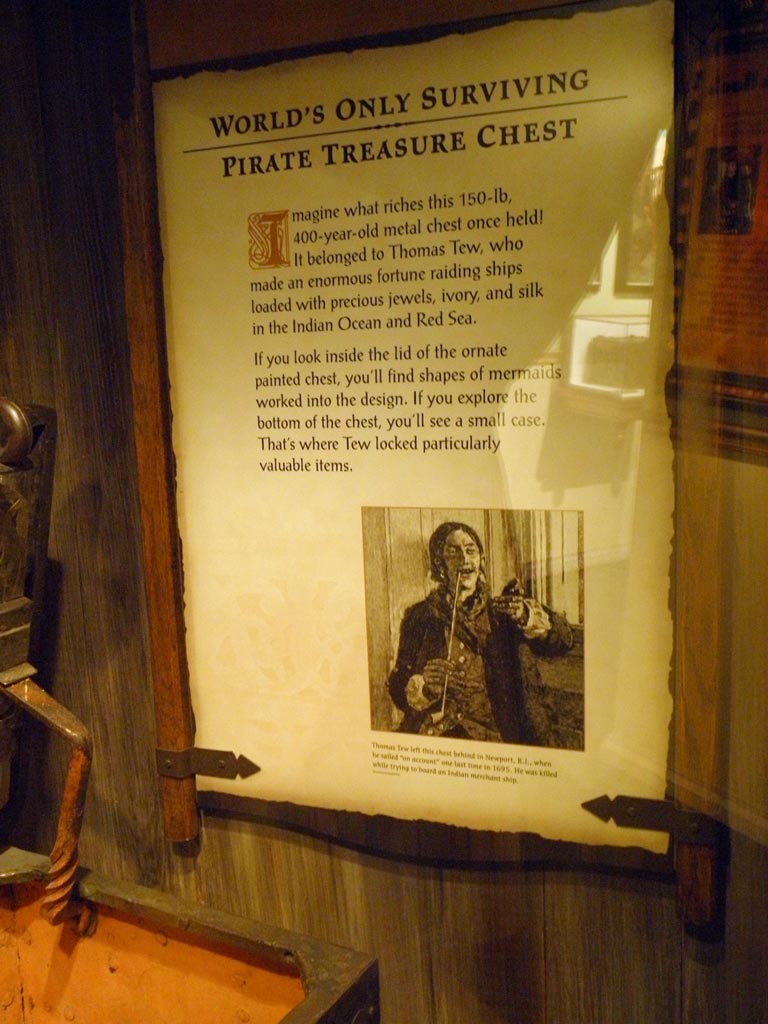 We managed to get a decent photo of the information card for this item, but here is the text:
World’s Only Surviving Pirate Treasure Chest
Imagine what riches this 150-lb. 400-year-old metal chest once held! It belonged to Thomas Tew, who made an enormous fortune raiding ships loaded with precious jewels, ivory, and silk in the Indian Ocean and Red Sea.
If you look inside the lid of the ornate painted chest, you’ll find shapes of mermaids worked into the design. If you explore the bottom of the chest, you’ll see a small case. That’s where Tew locked particularly valuable items.
[Under the portrait:] Thomas Tew left this chest behind in Newport, R.I., when he sailed “on account” one last time in 1695. He was killed while trying to board an Indian merchant ship.
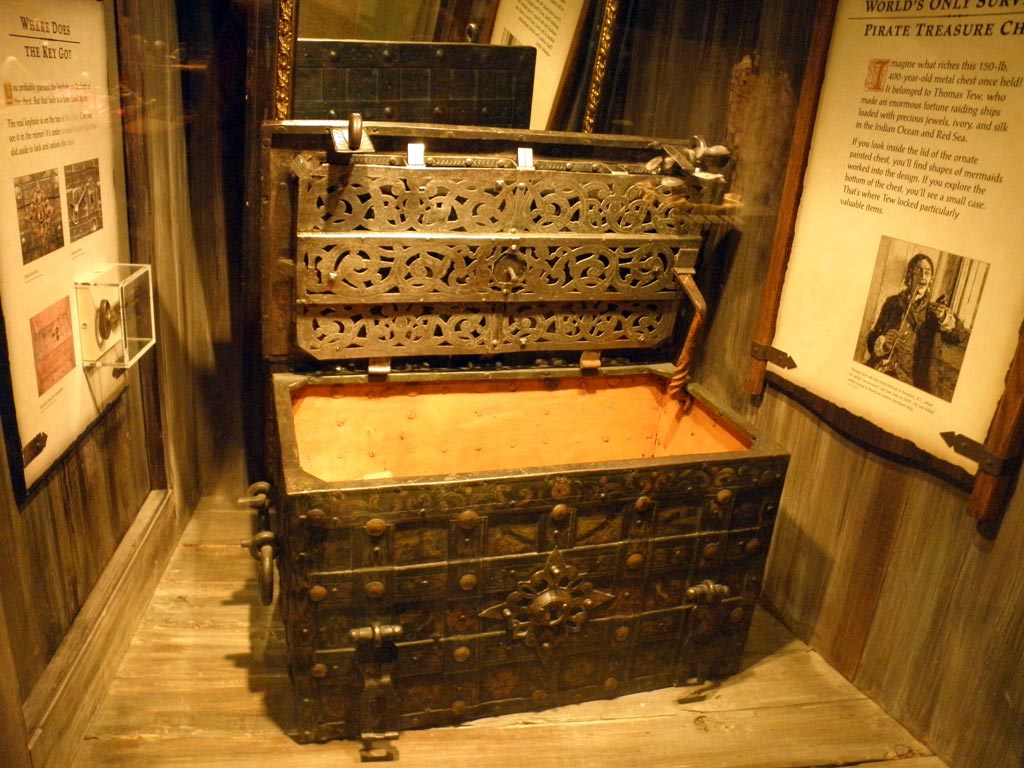 A view of the whole display.
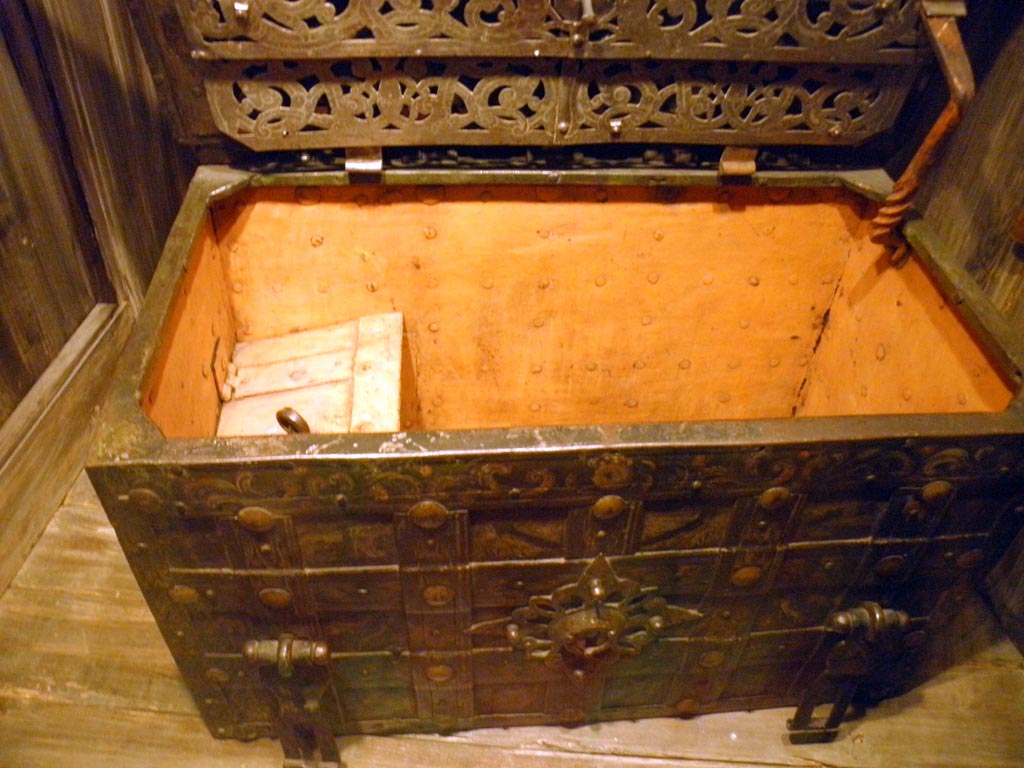 Another view of the front of the chest and some of the interior.
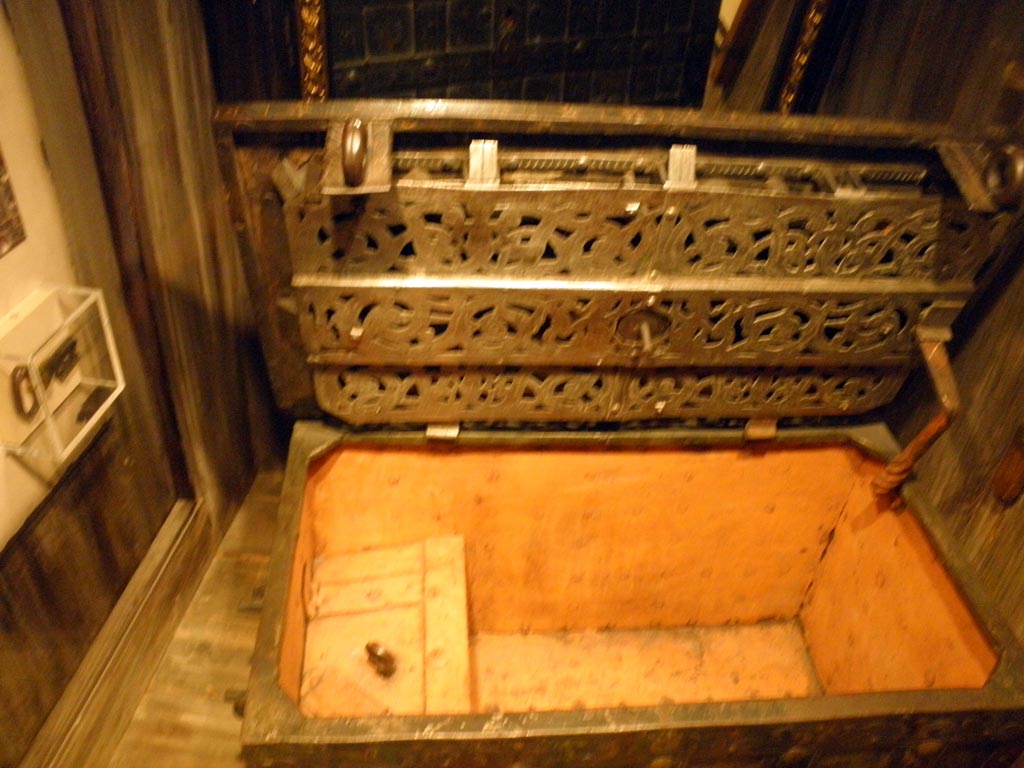 Here is a better look at the interior, with a clear view of the locked case mentioned on the information card.
Note the small box on the wall to the left, which holds the key to the chest.
On the left in the display is a second information card. The text reads:
“Where Does the Key Go?”
You probably guessed the keyhole on the front of the chest. But that hole is a fake. Look again.
The real keyhole is on the top of the chest. Can you see it in the mirror? It’s under a metal bracket that Tew slid aside to lock and unlock the chest.
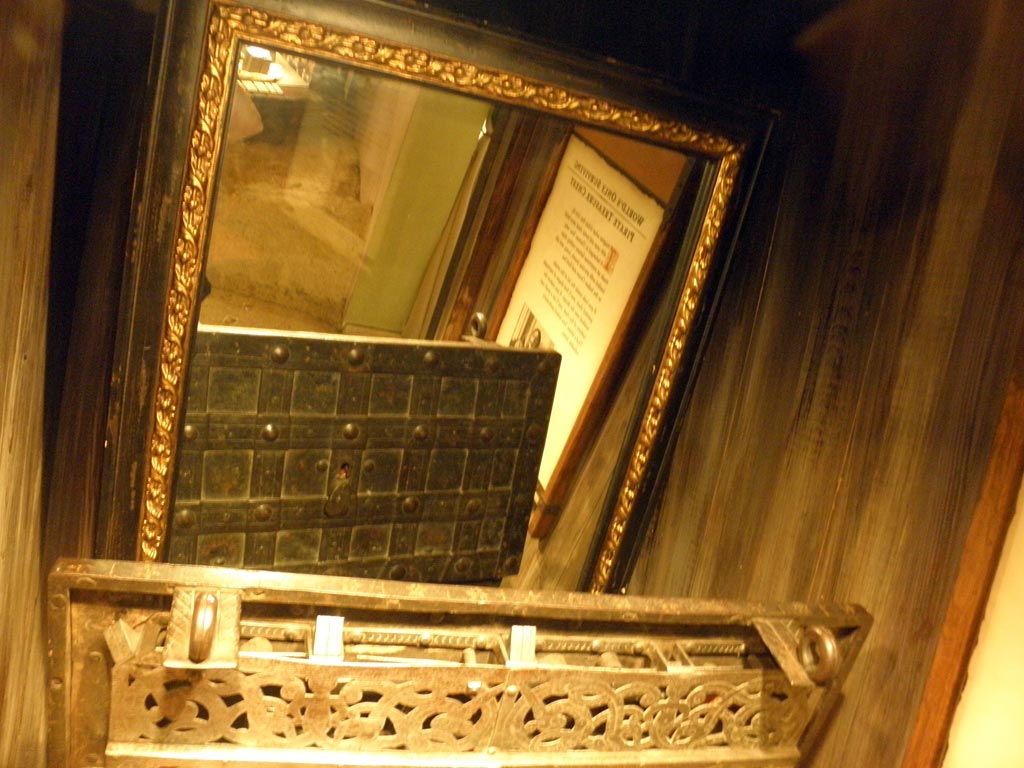 This photo shows a good view of the actual keyhole, reflected in the mirror behind the chest.
This type of tricky chest has great potential for roleplaying games. It doesn’t matter how skilled someone is at picking locks if that nice, prominent lock is a complete fake!
We hope you’ve enjoyed our little visit to the St. Augustine Pirate and Treasure Museum. If you’d like to visit it yourself, you can find more information at www.ThePirateMuseum.com . You can also read a 2025 review at Reason.com that reflects our visit well.
For more on the history of Spanish treasure ships lost near Florida, you can visit Florida History in 3D, a website of the Florida Division of Historical Resources.